



These accounts capture adjustments to revenue caused by customer returns, discounts, and allowances. Contra revenue accounts represent money that was expected to be earned but is now deducted due to changes in the initial sales transaction. Types of liabilities can include loans, mortgages, accounts payable, and accrued expenses. Money a business owes to its suppliers, vendors, or creditors for goods or services bought on credit; considered a short-term debt.

Real Estate Investment Trust (REIT)
Taxing of foreign corporations depends on whether the corporation has Nexus or effectively connected income in that state. Costs that remain constant within a defined range of activity, volume, or time period. Tangible LONG TERM ASSETS used in the continuing operation of a business that are unlikely to change for a long time. Period of 12 consecutive months chosen by an entity as its ACCOUNTING period which may or may not be a calendar year.
Time Value of Money
It may be held indefinitely, retired, issued upon exercise of STOCK OPTIONS or resold. Anyone who buys and sells goods or services for PROFIT; a DEALER or merchant. Excess of the proceeds realized on the sale of either INVENTORY or noninventory goods.
The Role of Debits and Credits in Bookkeeping
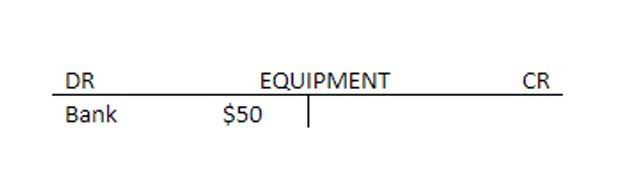
These concepts of accrual vs deferral are important concepts that play a vital role in the recognition of incomes and expenses of a business. At the end of 202X, company needs to record the expense and accrued payable. Based on the estimation, company expects the utility expense is $ 1,000. At the end of the month, company will record the accrued expense base on the estimated amount. The management estimated the accrued expense base on a variety of evidence such as past data, or actual events. Each transaction includes at least one debit and one credit to different accounts.
Use the double-entry bookkeeping system
A contra liability is a general ledger account with a debit balance that reduces the normal credit balance of a standard liability account to present the net value on a balance sheet. Examples of contra liabilities are Discounts on Bonds and Notes Payable and Short-Term Portion of Long-Term Debt. Expense accounts and the contra expense accounts with which they are paired are typically combined in the income statement in a single line item, so that readers are not aware that a contra account even exists. Assume that a company uses a contra expense account to record the https://mena.markets/top-down-vs-bottom-up-budgeting-boost-your-4/ amounts that employees paid toward the company’s health insurance costs.
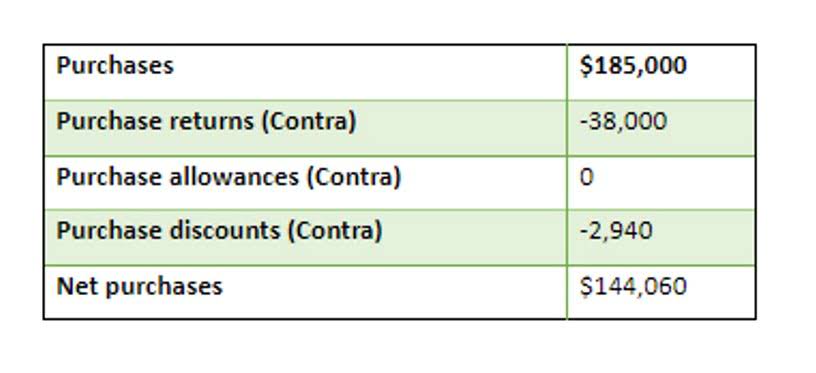
- In general, the use of contra accounts helps to provide a more accurate picture of a company’s financial position and performance by showing the net revenue, net sales, or net balance of an account.
- Contra accounts reduce the value of related accounts, ensuring more accurate financial reporting.
- So there is no expense record in the new period if both balances is equal.
- You could explore comprehensive webinars and workshops focused on the nitty-gritty of contra accounts.

Activities that occur only periodically, the data involved are generally not part of the routine flow of transactions. Method used in evaluating investments whereby the net present value of all CASH outflows and cash inflows is calculated using a given DISCOUNT RATE, usually required rate of return. Report issued by an ACCOUNTANT based on limited procedures that states that nothing has come to the accountant’s attention to indicate that the financial information is not fairly presented. Investment company which generally offers its shares to the general public and invests the proceeds in a diversified portfolio of SECURITIES. BOND issued by a government or public body, the INTEREST on which is typically exempt from federal taxation.
At this point, it isn’t known which accounts will become uncollectible so the Accounts Receivable balance isn’t adjusted. Instead, an adjusting journal entry is done to record the opposite of expense in accounting estimated amount of bad debt. Accumulated Depreciation is a contra asset that pairs with Fixed Assets. Accumulated Depreciation acts as a subaccount for tracking the ongoing depreciation of an asset. A Fixed Asset is a Long-term Asset used by a company to create revenue. Each year of an asset’s life, another year of Depreciation Expense is recorded.
- A delivery van is purchased by a business to use in delivering product and picking up materials.
- The cost of goods sold (COGS) account will have a debit balance of $100,000, representing the initial cost of the inventory.
- By subtracting these amounts from the total sales, what you’re left with is net revenue— the revenue that’s truly earned and likely to stay in the company’s pocket.
- It may be held indefinitely, retired, issued upon exercise of STOCK OPTIONS or resold.
- (2) Requirement found in ethical codes that the person governed by the ethical rules exercise professional care in conducting his or her activities.
- Each governing agency and its forms scheduled reporting and most importantly payments have a required due date.
- INVENTORY account consisting of partially completed goods awaiting completion and transfer to finished inventory.
- When you record debits and credits, make two or more entries for every transaction.
- A contra-asset account used to reduce ACCOUNTS RECEIVABLE to the amount that is expected to be collected in cash.
- An INCOME STATEMENT that projects the NET INCOME of a business for a future period.
Money spent on repairs goes into an expense account because it’s all about maintaining what you already have. There’s also accrued interest on loans where the payment is due in the future. Keeping detailed records ensures that nothing slips through the cracks.
Secured Bond
Accrued expenses are expenses that have been incurred but the payment has not been made yet. A prepaid expense is a type of asset on the current assets section of the balance sheet. These are payments made in advance to receive products or services at a later date. When a company makes a sale, it credits the revenue account to record income. As such, for an asset or payroll expense account that is naturally a debit account, the contra accounts will be in a credit position.

No comment yet, add your voice below!